Understand any research field. Keep up with your own.
For academics who cannot read everything: maps, trends, summaries and evidence-backed opportunities, from the literature and from funders, industry, governments and the news.
Start from any field of science
Browse all of science, from domains down to topics. For each level: size, growth, what is rising and what is fading, from exact paper counts.
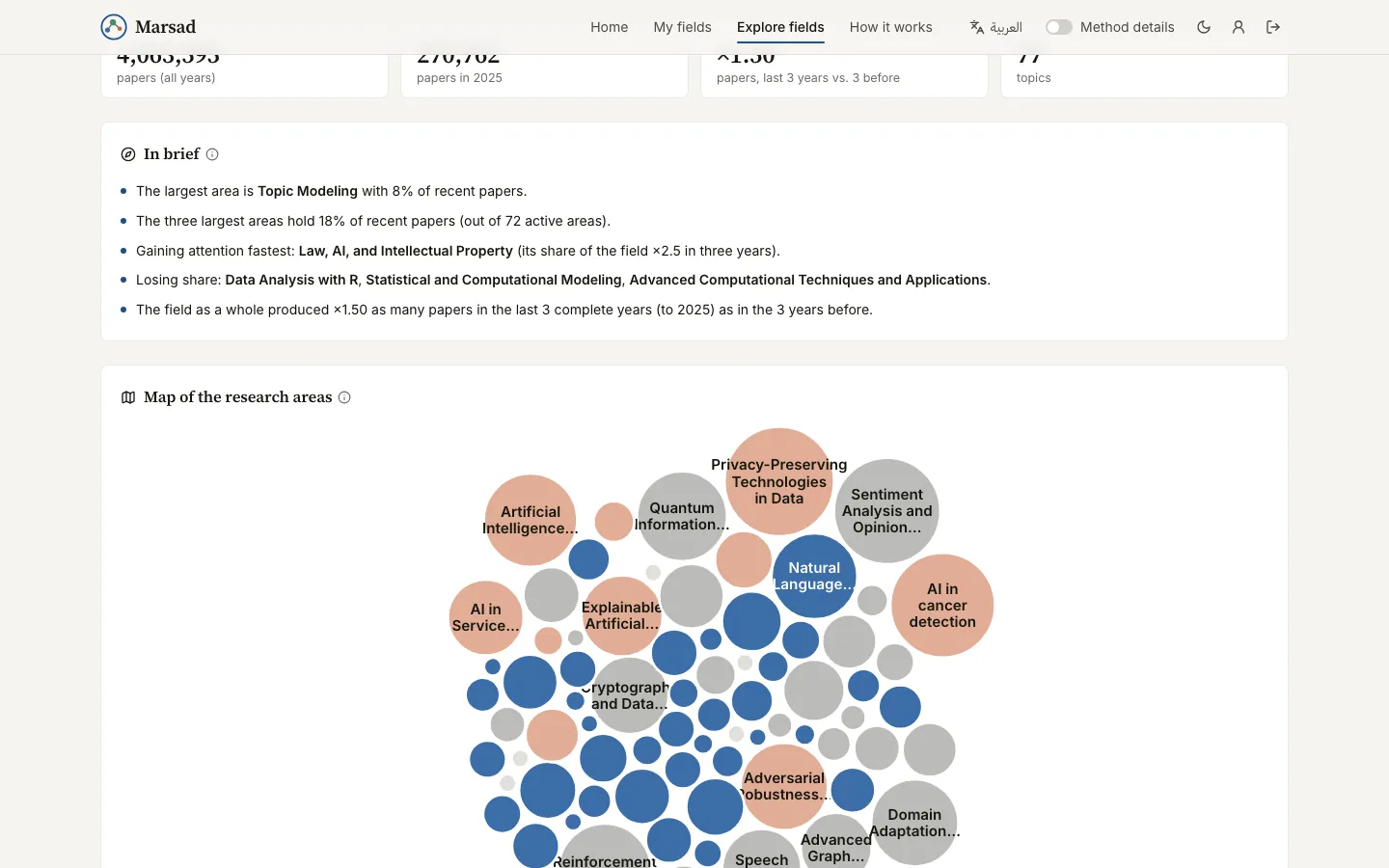
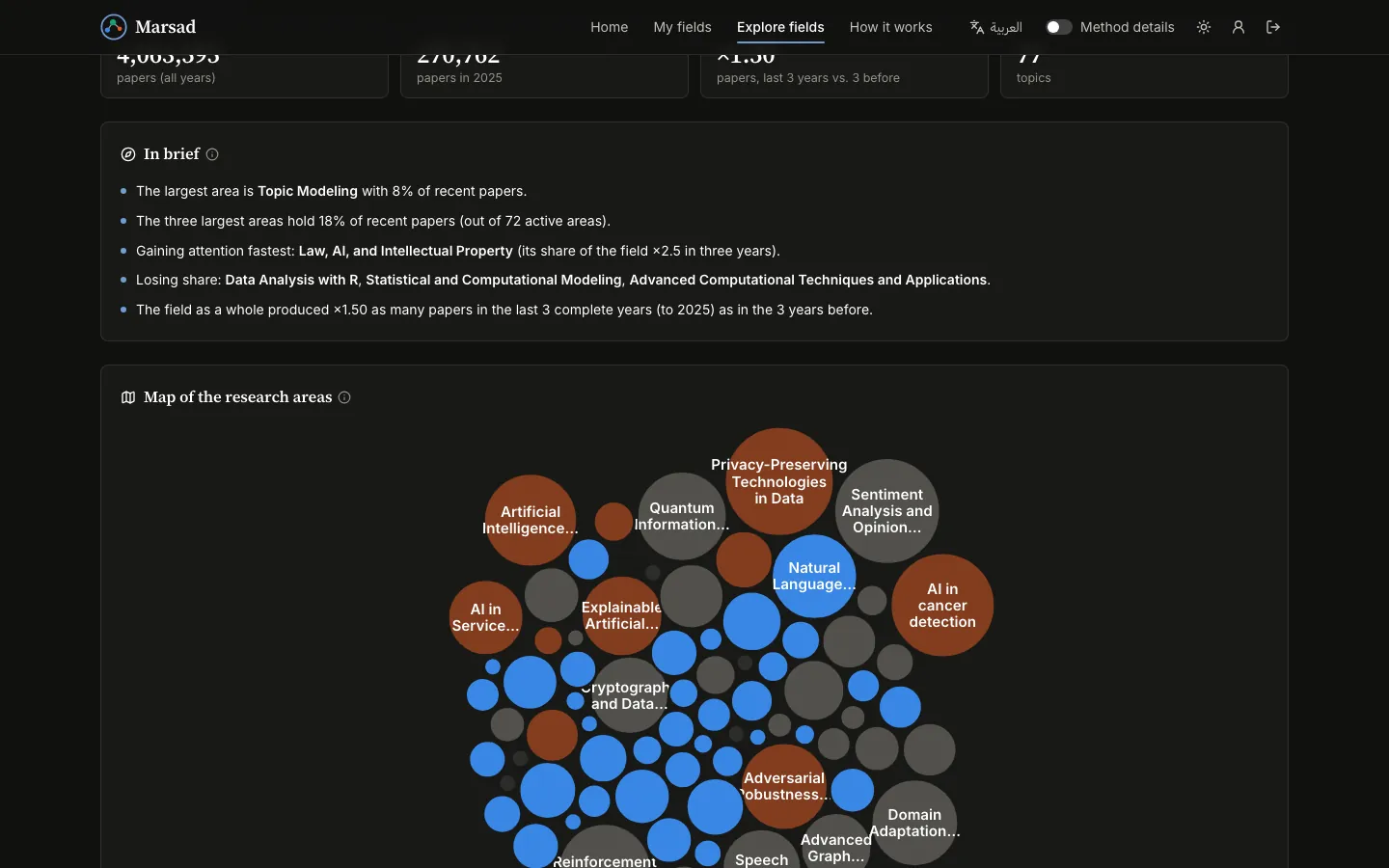
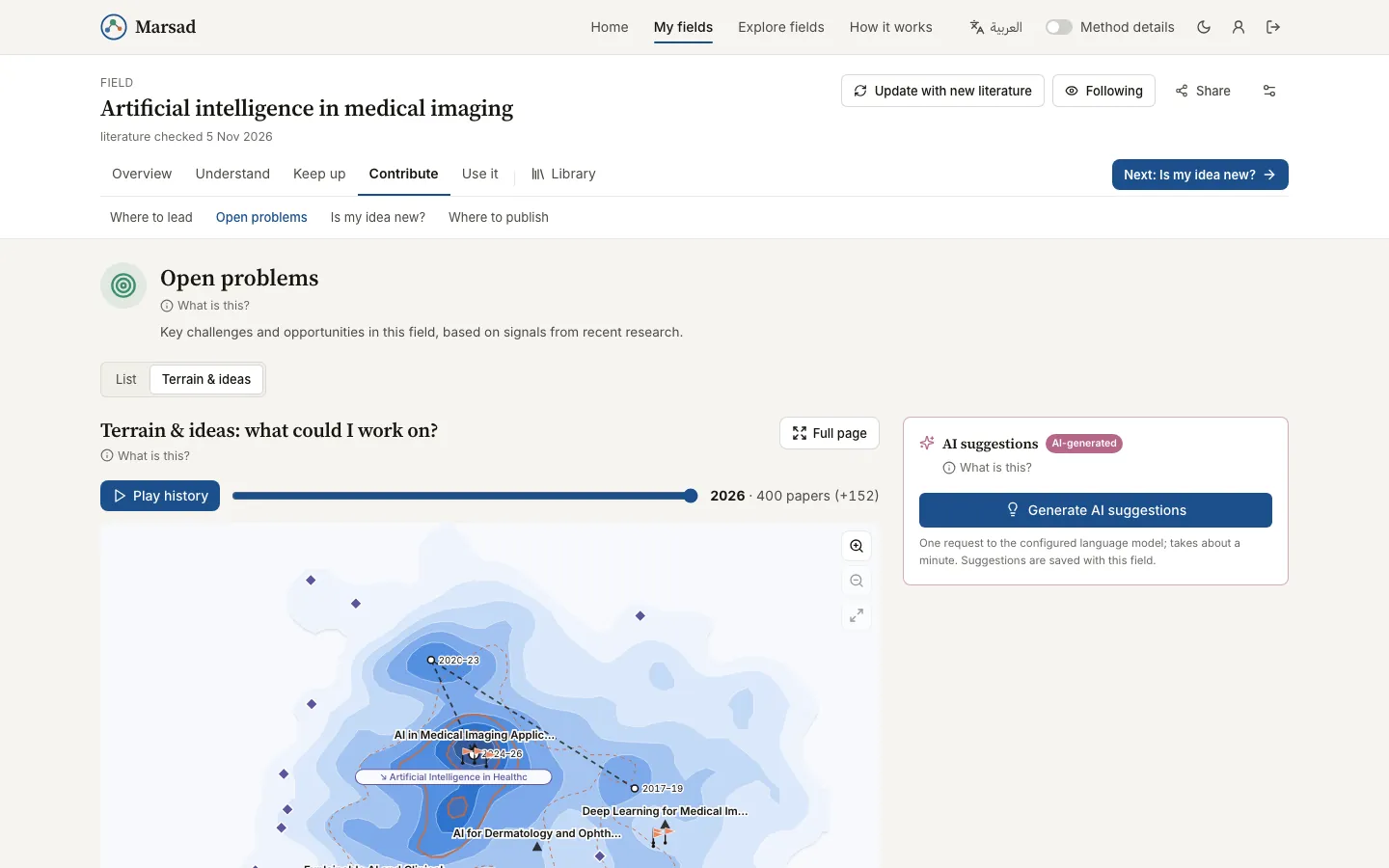
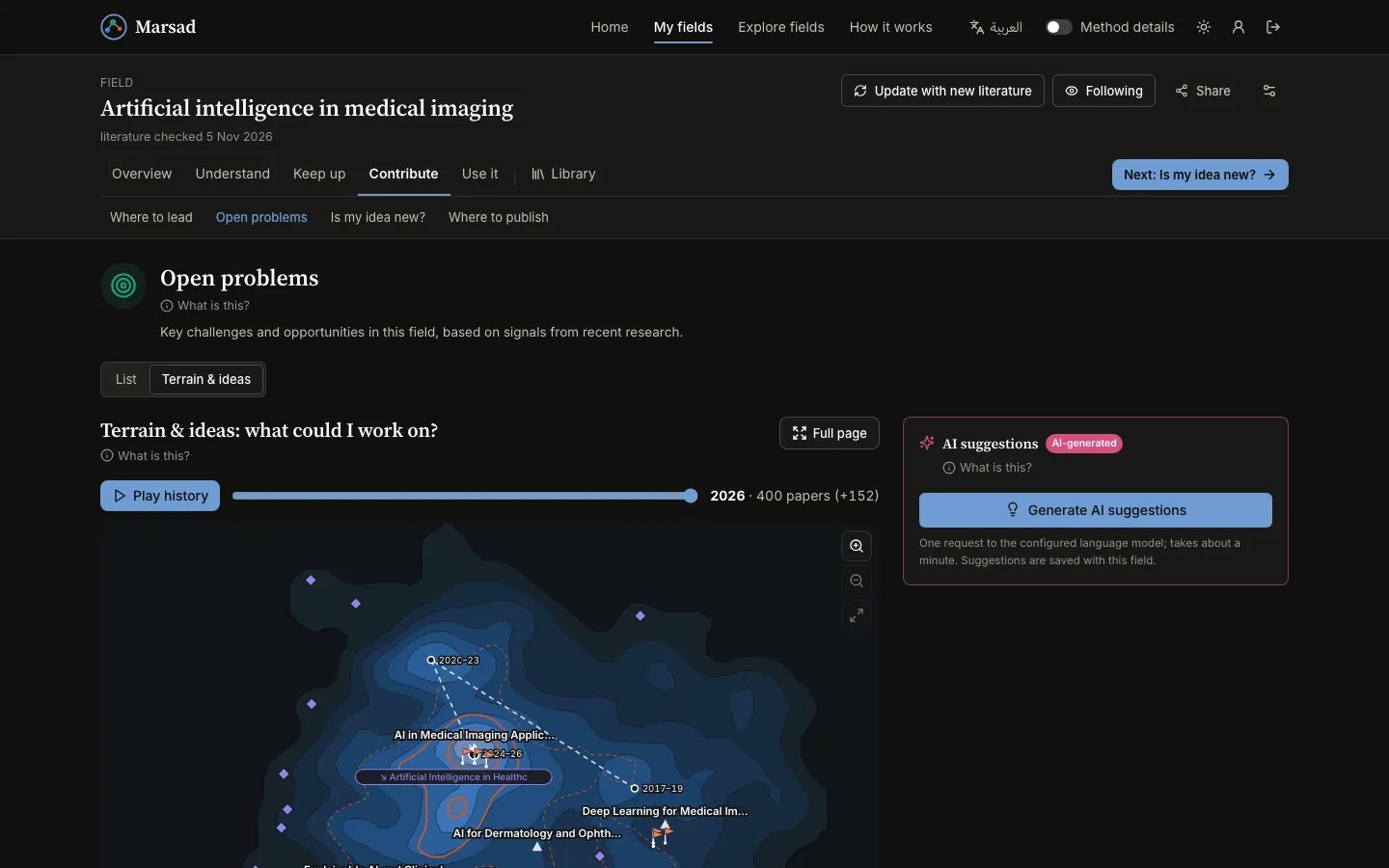
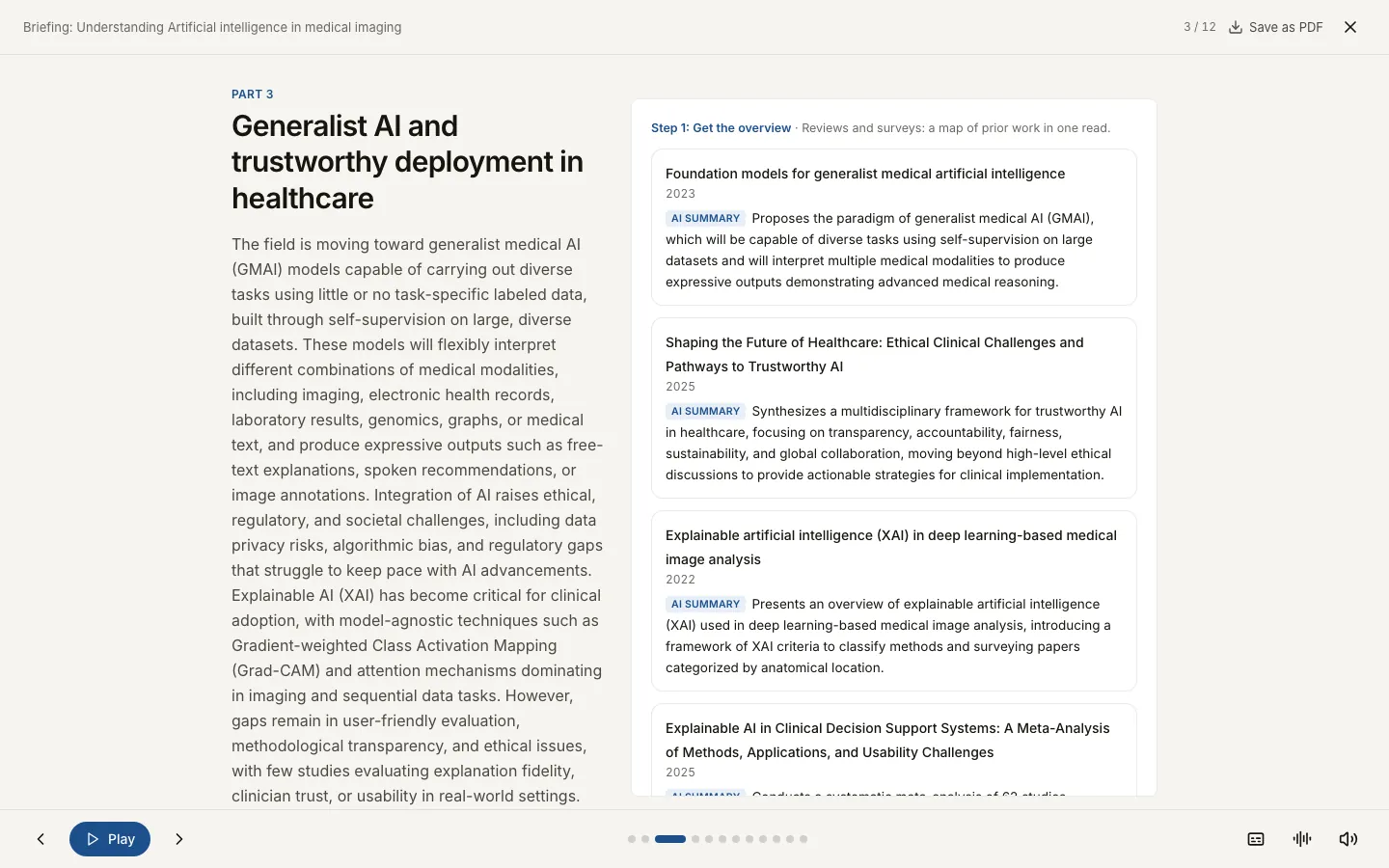
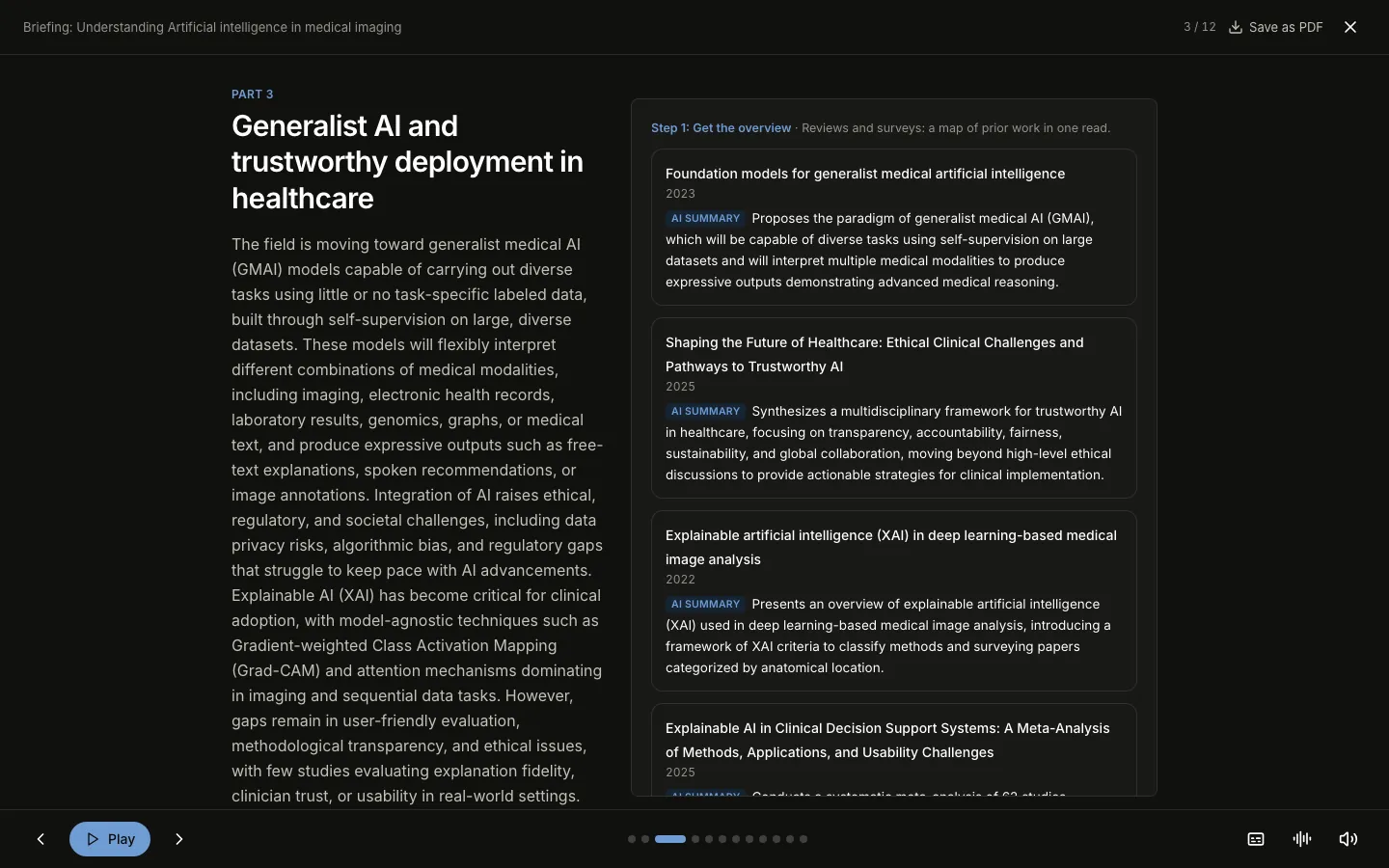
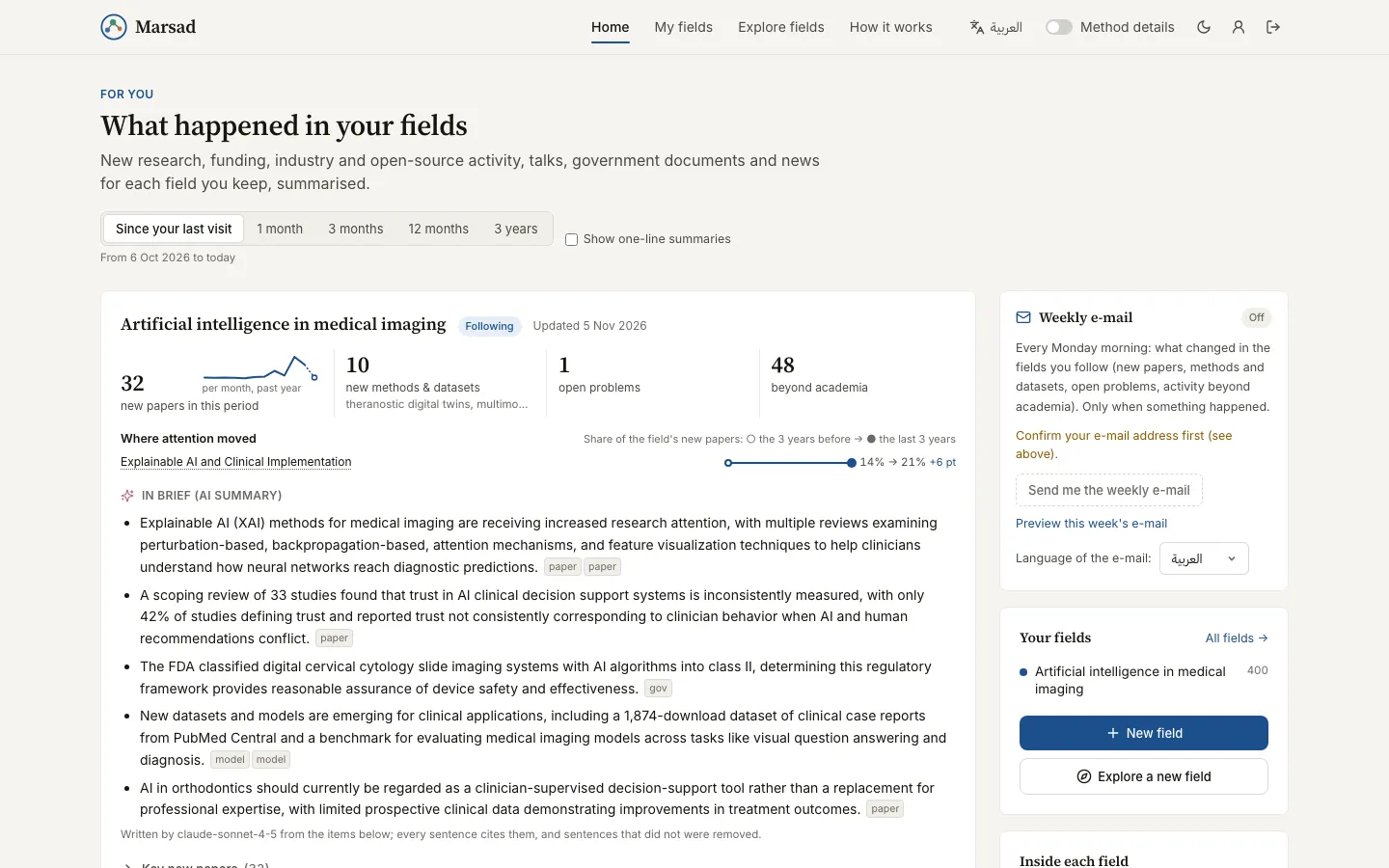
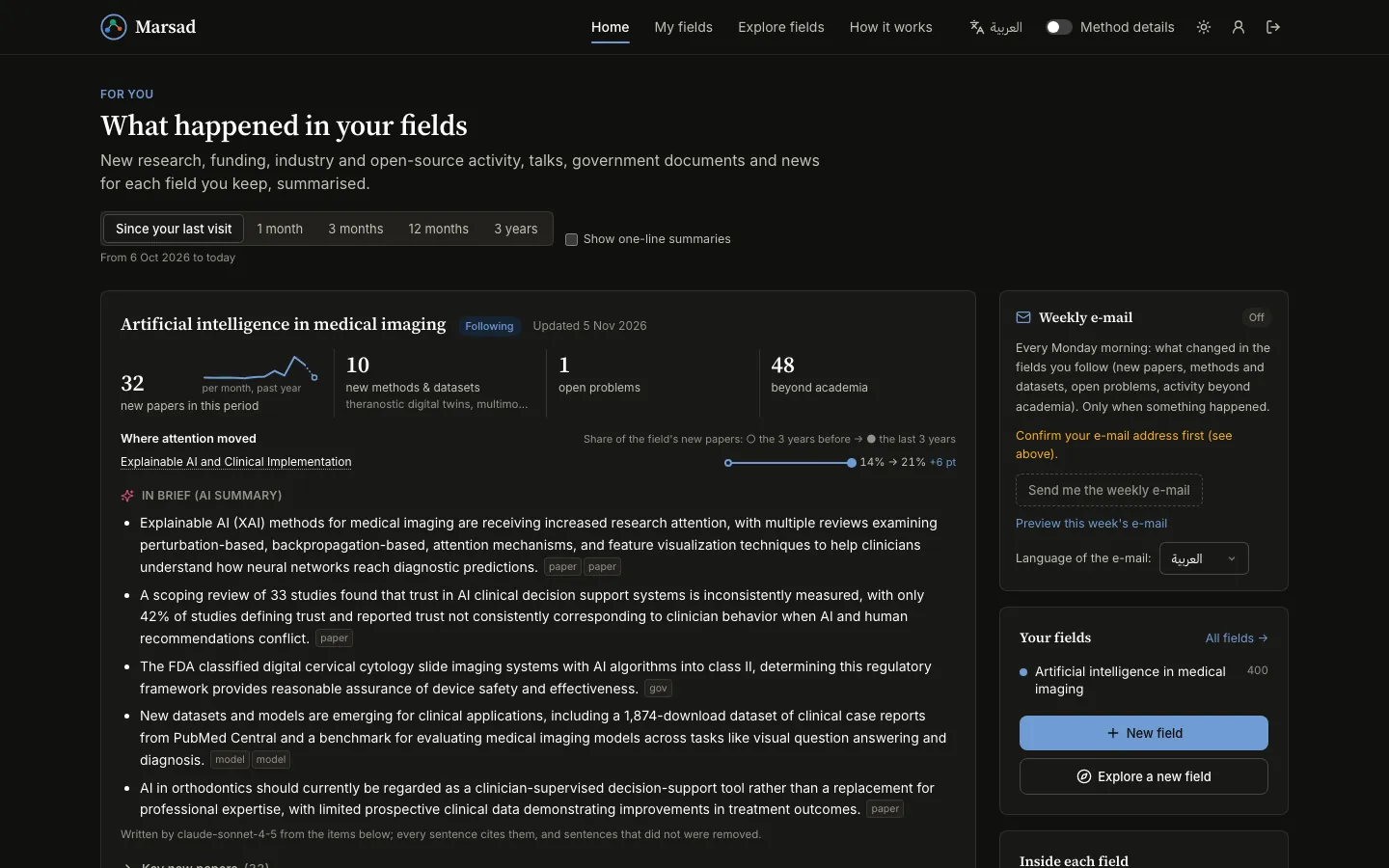
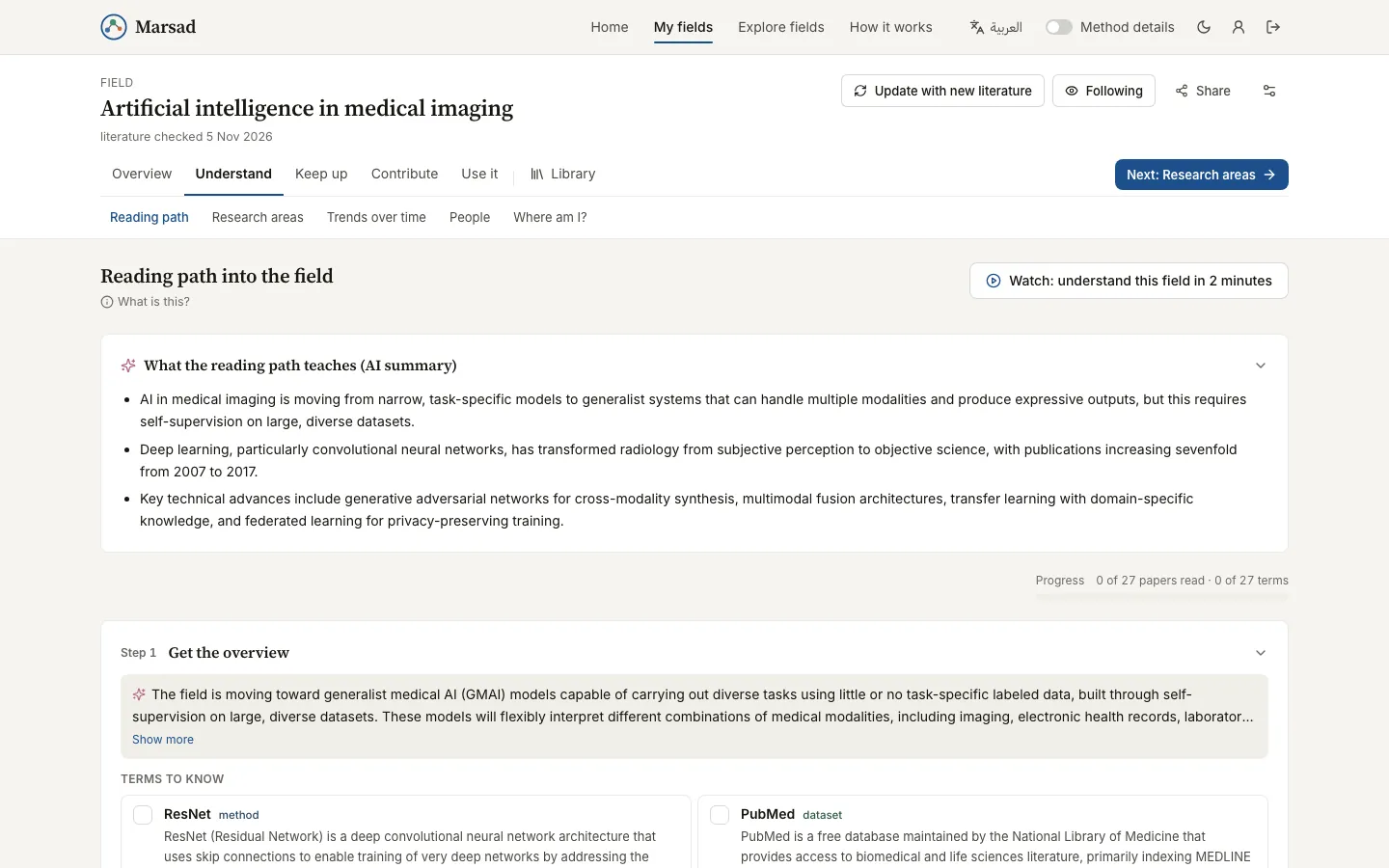
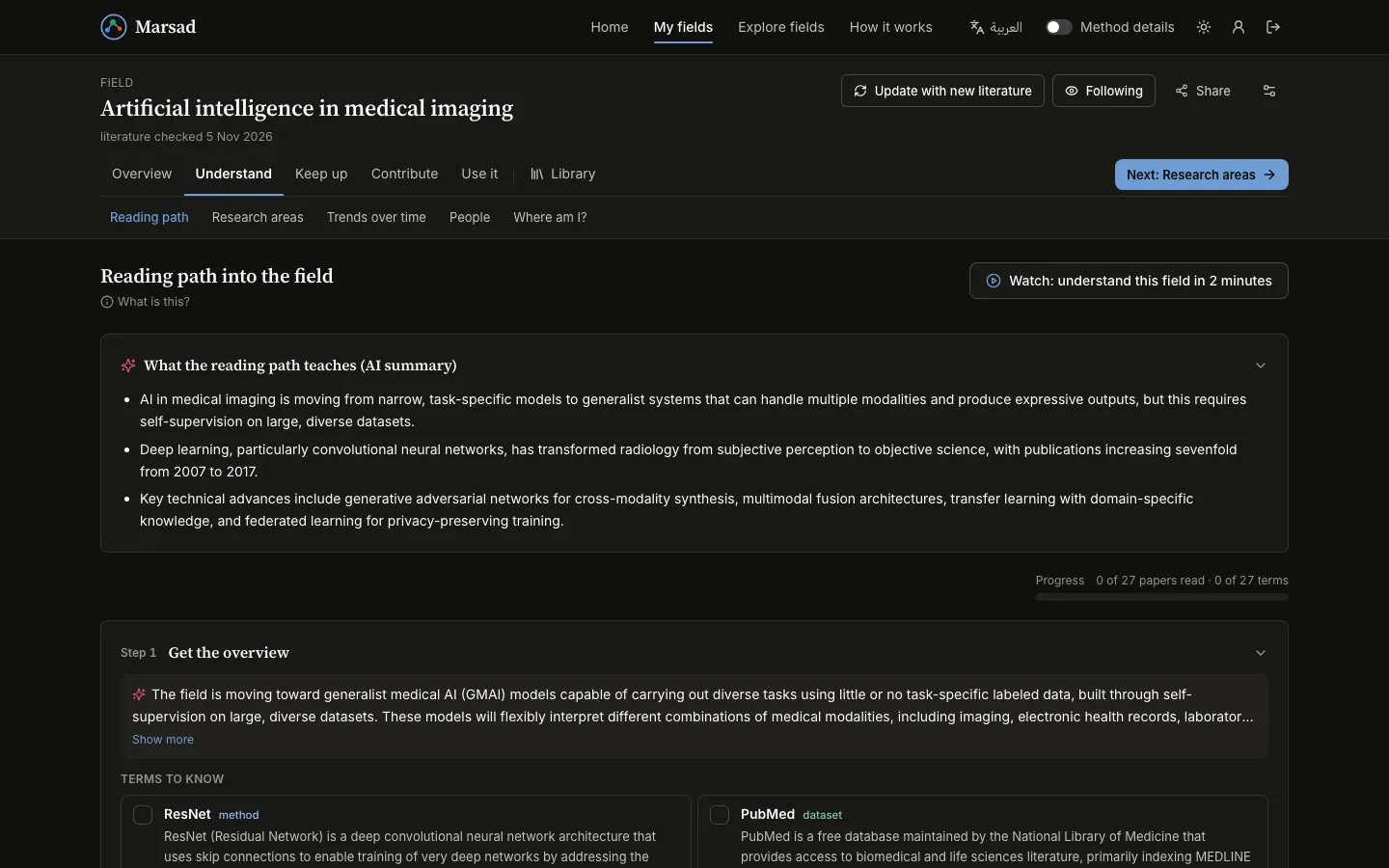
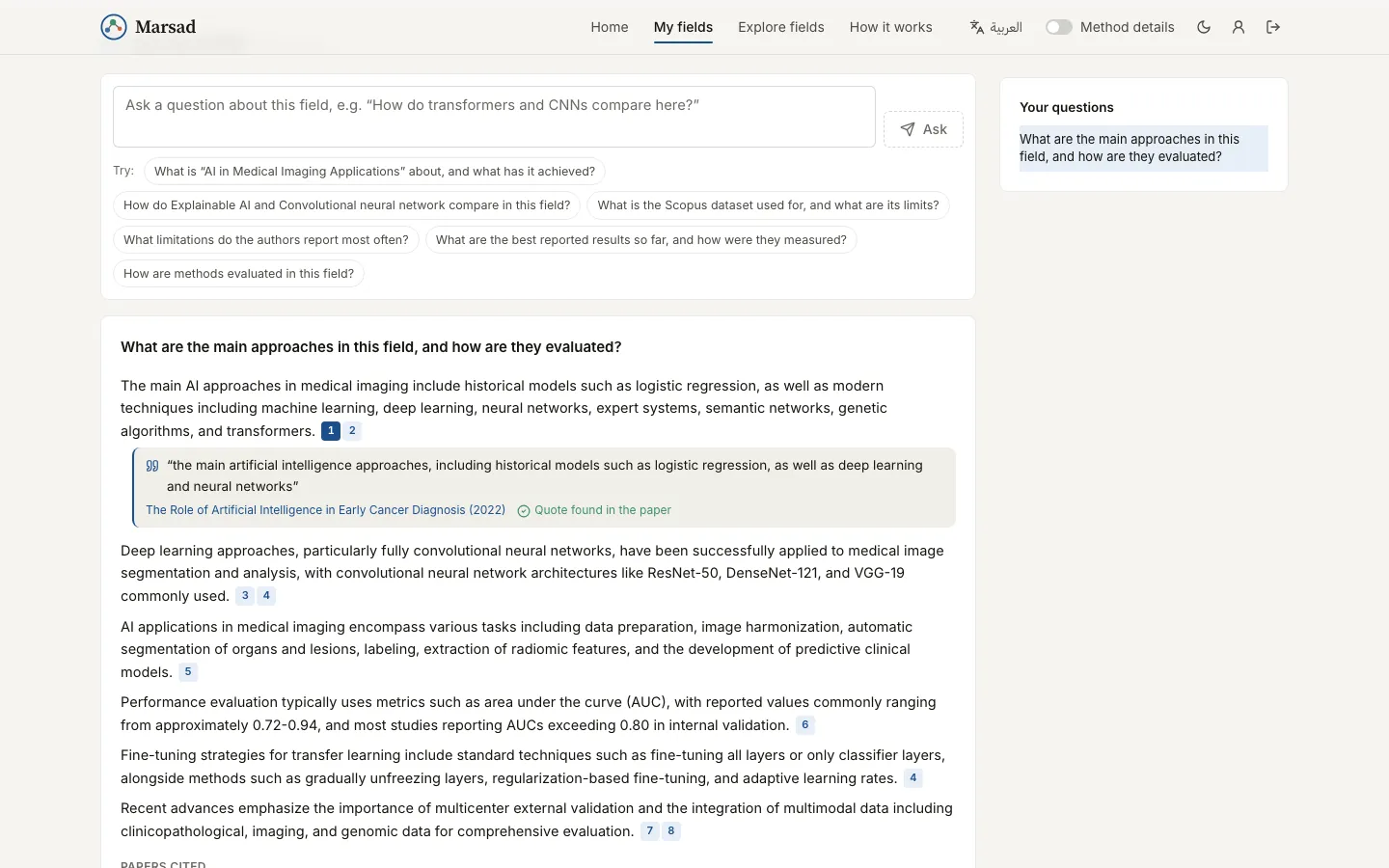
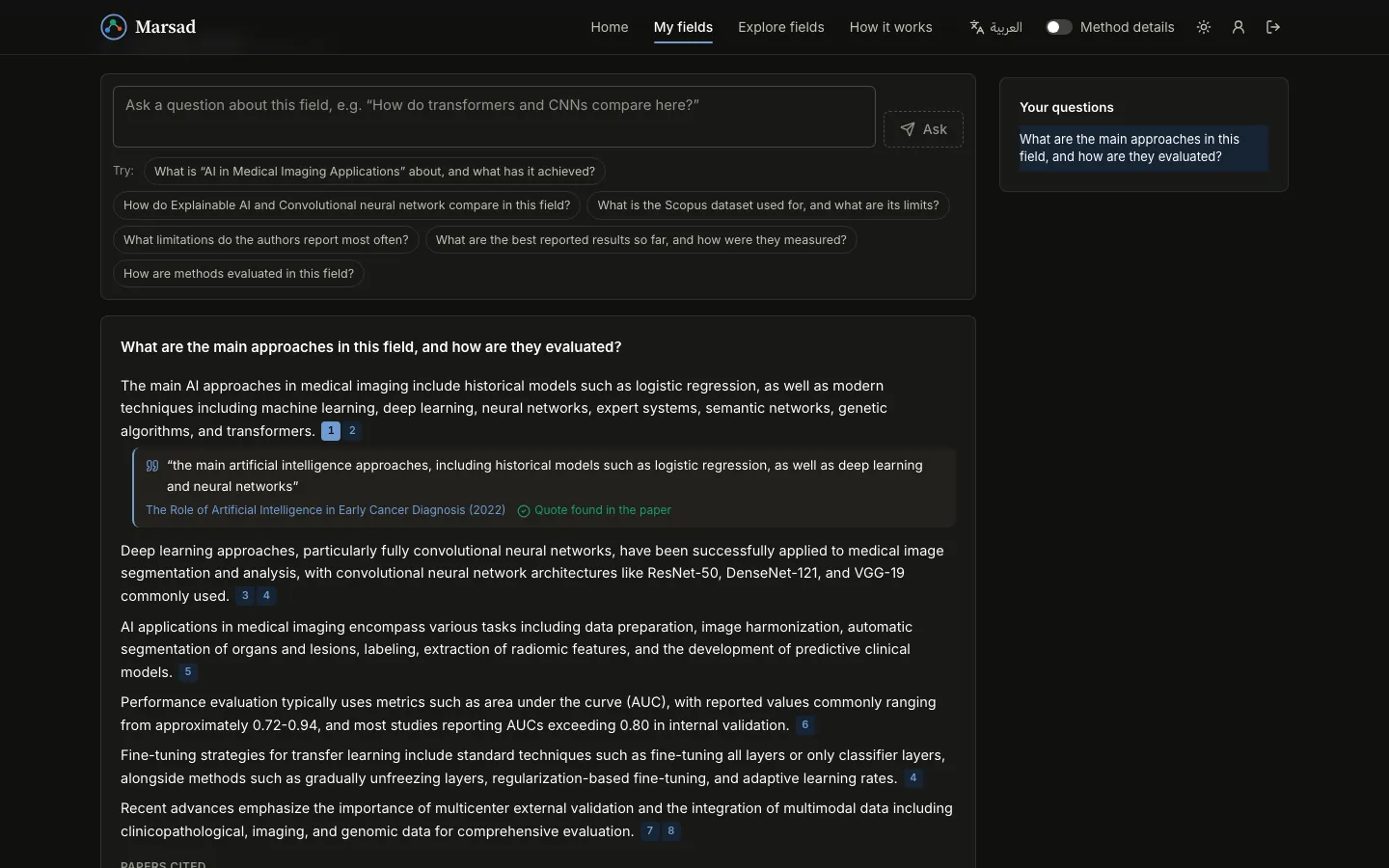
Screens from a sample field; the papers and figures shown are illustrative.
Built on open scholarly and public data
- OpenAlex
- Semantic Scholar
- Crossref
- arXiv
- Europe PMC
- ORCID
- NIH RePORTER
- NSF Awards
- PatentsView
- Federal Register
- GitHub
- Hugging Face
- researchseminars.org
- GDELT news
Explore a field you don't know yet
Start from a whole field and narrow down: what it is made of, how it developed, what is rising now, what to read first — as maps, 2-minute briefings and summaries.
- Map of research areas and how they evolved
- Narrated 2-minute briefing
- What to read first, summarised
Follow your research topic
Describe your topic once. The platform keeps a living map of it and tells you what changed: new papers, funding, patents, policy and news, your standing, and new research directions.
- A digest of what happened, in plain language
- Your standing next to the field
- Trends, open problems and AI-suggested topics
Why researchers can trust it
Evidence first, synthesis second
Checkable, not generated
Summaries cite their papers; quotes are verified against the abstract, and unsupported sentences are dropped.
Open problems are challenged
Open problems come from measurable signals, then a search tries to prove them wrong before you see them.
Private by default
Your topics may be unpublished ideas: fields are private, and topics are kept out of the logs.
Made for two languages
The whole interface and the generated briefings work in English and Arabic, right to left included.
How it works
From a topic to a living map
- 1
Scope & search
Topic is expanded into concept facets and Boolean queries across OpenAlex, Semantic Scholar, Crossref, arXiv and Europe PMC.
- 2
Structure
Papers are deduplicated, embedded and clustered; the taxonomy emerges from the literature.
- 3
Evidence
Methods, datasets, evaluation designs and author-stated limitations are extracted with verbatim excerpts.
- 4
Open problems, challenged
Open problems come from measurable signals, then an adversarial search tries to prove them wrong.
Try it
Describe your topic
Your field, observed.
Build a field in minutes, then let Marsad keep it current while you do the research.